Table of Contents
| Title | Presenter | Date |
|---|---|---|
| Comparing DNA Companies, Ethnicity and Match Result | Dawn Carlile | October 14, 2026 6:00 pm |
| Tools that Reveal What Matches Can’t Tell You Alone: Gephi, the Coverage Estimator, and the Shared cM Project | Jill Nock, AG® | November 11, 2026 6:00 pm |
| An Introduction to Forensic Genetic Genealogy | Penny Walters, PhD | December 9, 2026 6:00 pm |
| What is ‘big data’? And what are the implications of big data in the genealogy field? | Penny Walters, PhD | January 13, 2027 6:00 pm |
Comparing DNA Companies, Ethnicity and Match Result
Presented By: Dawn Carlile on October 14, 2026 6:00 pm
Register Now
Learn which tests and tools each company offers, and why you may want to choose a specific company for testing. A comparison of my ethnicity results, the total number of matches from each, the number of close matches, and the unique matches from each company. The five companies covered are 23andMe, AncestryDNA, FamilyTreeDNA, Living DNA, and MyHeritage DNA.
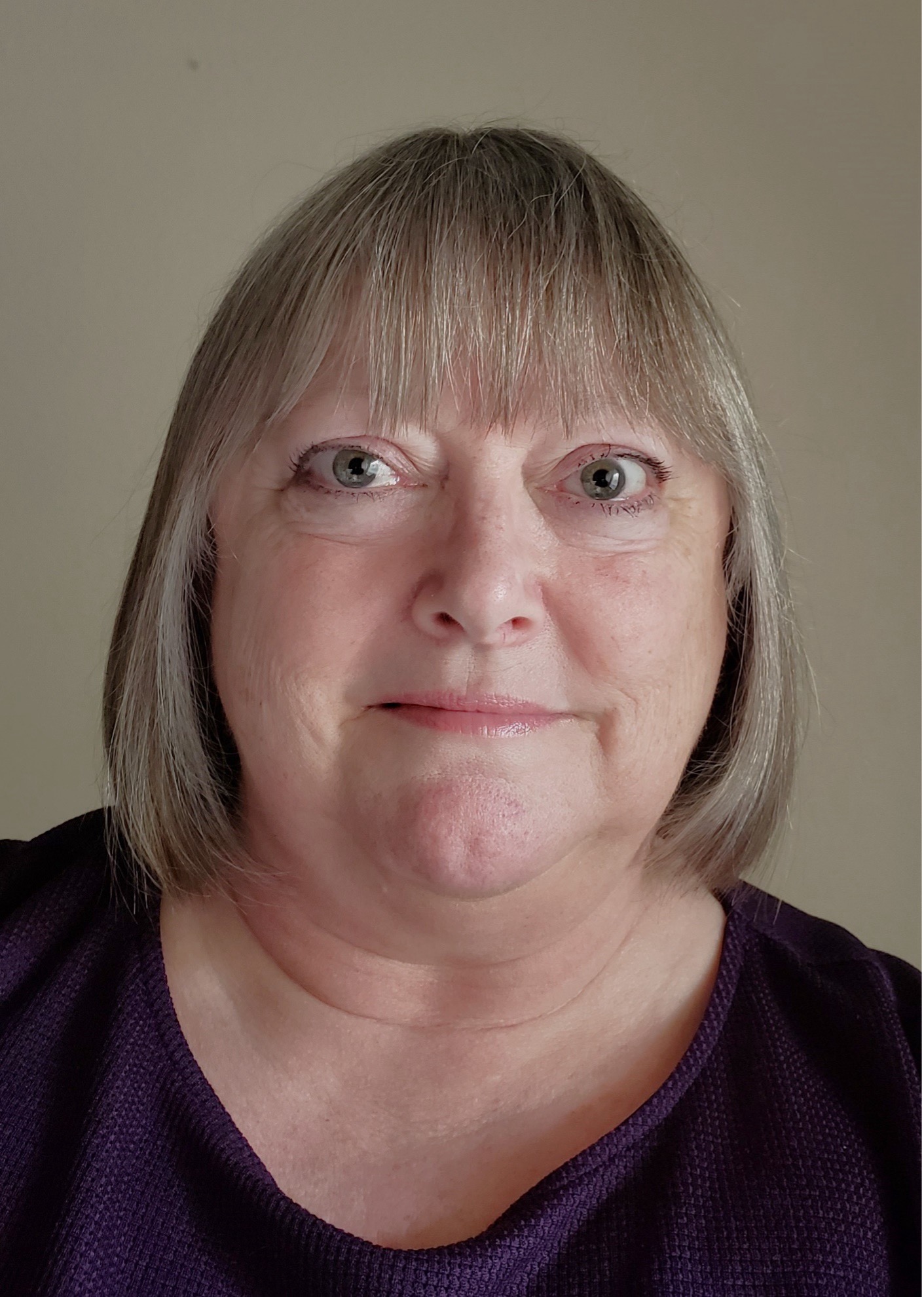
Dawn Carlile is a professional genealogist, educator, and lecturer who enjoys teaching others about researching their families as much as she does about researching her own and the families of others. After many years of helping others with their research, Dawn started Genealogy Roots and Branches in 2021. Having completed many institute courses at Salt Lake Institute of Genealogy, GRIP Genealogy Institute, Institute of Genealogical and Historical Research, and Genealogical Institute on Federal Records, she has even more on her list. Dawn is the current president and an instructor for the Oregon Genealogical Society, a member of the Association of Professional Genealogists, National Genealogical Society, and several other state and county genealogical societies.
Tools that Reveal What Matches Can’t Tell You Alone: Gephi, the Coverage Estimator, and the Shared cM Project
Presented By: Jill Nock, AG® on November 11, 2026 6:00 pm
Register Now
Three powerful tools can transform a DNA research project from promising to provable—yet most genealogists either don't know they exist or aren't sure how to apply them to a real case. This session demonstrates all three through detailed examination of a completed research project, showing how the results of each tool were interpreted and reported. Gephi network visualization software identified four distinct subclusters pointing to five child lines of a proposed common ancestor—revealing patterns invisible in a standard match list. DNAPainter's Coverage Estimator quantified how much of the proposed ancestor's genome was recovered across multiple descendant lines, providing a transparent measure of the project's scope and an honest basis for evaluating the strength of the conclusion. The Shared cM Project validated each hypothesized relationship and provided a framework for honestly addressing matches that fall slightly outside expected ranges. Attendees will see how these tools work together within a structured research project and understand how to interpret and report their results—including what to say when the results are incomplete or imperfect.
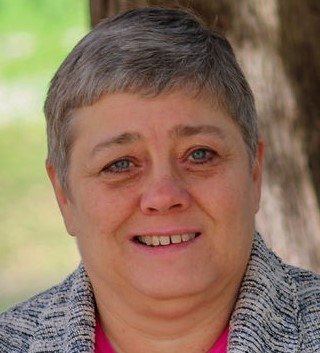
Jill Nock, AG®, is a professional genealogist accredited through ICAPGen℠ in the U.S. Upper South. Inspired by the 1977 television miniseries Roots, she has been untangling family mysteries for nearly five decades. Through her business, Mountain State Genealogy, she specializes in DNA analysis, indirect evidence methodology, and transforming complex research into clearly written reports. A ProGen 59 graduate, Jill has completed advanced training at GRIP, SLIG, and IGHR. She is proficient in reading and transcribing historical handwriting from the 1600s forward — a skill that opens records inaccessible to many researchers. She serves as Treasurer for both ICAPGen and the APG Writers SIG, and is a UGA Commissioner. Her presentations range from beginner-friendly introductions to advanced methodology, with particular depth in Revolutionary War patriot research and Upper South records.
An Introduction to Forensic Genetic Genealogy
Presented By: Penny Walters, PhD on December 9, 2026 6:00 pm
Register Now
Many of us have done a DNA test, to find out ‘where we’re from.’ This marketing hook has been very successful, with more than 40 million direct-to-consumer DNA tests having been sold across the world. Many people are intrigued by the statistical evidence which can emerge from DNA test results, especially matching with DNA relatives and learning about inherited ethnicities. People want to spread their genealogy research across several DNA testing or data merging sites such as GEDmatch, to increase the likelihood of finding living relatives or more ancestors. Data available in GEDmatch can often identify a 3rd cousin or closer in 90% of the population. An unexpected use of the data from DNA testing is that some information has been accessed by other unknown parties. The new practice of law enforcement uploading DNA from a crime scene, and subsequently utilising online trees and DNA, emerged during the case of the apprehension of the ‘Golden State’ serial killer. The method of super-sleuthing familial relationships and then apprehending a suspect divided the genealogy community. Some pioneering and key case studies will be detailed. The arising ethical dilemmas of the super-sleuthing involved, the potential for outside agencies to increasingly access your tree, and the implications of the broader uses of DNA data will be identified. Do the ends justify the means?
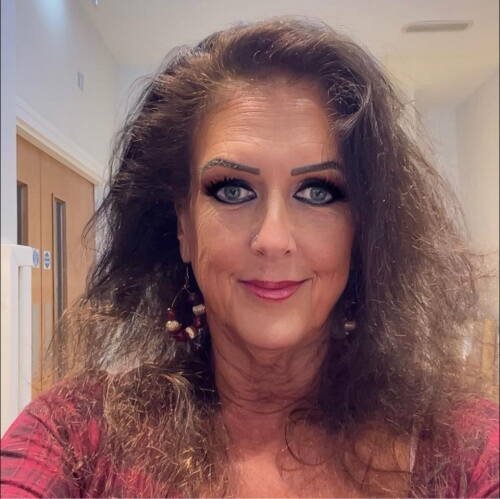
Dr. Penny Walters has been a University lecturer for 30 years, teaching Masters’ Business studies at British Universities. Penny's interest in genealogy started after having her first child and then wondering about her biological parents, as she was adopted. Penny has six mixed race children, who have all enjoyed discovering their roots through DNA ethnicity results. Penny lectures internationally in-person including throughout the UK, Ireland, America, and Australia; writes articles; is sought after for a wide range of webinar topics; and is a regular consultant on a variety of television and radio programmes. Penny has authored the books: 'Ethical Dilemmas in Genealogy' (2019) and ‘The Psychology of Searching’ (2020). www.searchmypast.co.uk
What is ‘big data’? And what are the implications of big data in the genealogy field?
Presented By: Penny Walters, PhD on January 13, 2027 6:00 pm
Register Now
Big data refers to extremely large and complex datasets that cannot be easily collected, managed, nor analysed using traditional methods. Big data relies on advanced computational tools and algorithms to identify patterns, relationships, and insights within these datasets. In genealogy, big data has fundamentally transformed how family histories are researched, interpreted, and shared. Mass digitization of historical records, such as civil registrations, censuses, immigration files, and military records, has created vast, searchable databases, while advanced algorithms enable genealogists to potentially identify connections even when records are incomplete, inconsistent, or misspelled. The impact is particularly pronounced in genetic genealogy, where millions of DNA profiles are analysed to identify relatives, trace ancestral origins, and uncover previously unknown family connections. Online platforms further facilitate global collaboration, allowing researchers to share findings and collectively expand family trees. However, these advances bring significant ethical and practical challenges. The aggregation of personal and genetic data raises privacy and security concerns, while algorithmic analysis may produce inaccuracies or reinforce biases present in historical records. DNA discoveries can also disrupt family dynamics, and the commercialization of genealogical data raises questions about ownership, consent, and the commodification of identity. Therefore big data simultaneously empowers and complicates genealogical research. While it offers unprecedented opportunities to uncover and preserve family histories, responsible and ethical frameworks are essential to balance innovation with privacy, accuracy, and respect for individuals and families.
Dr. Penny Walters has been a University lecturer for 30 years, teaching Masters’ Business studies at British Universities. Penny's interest in genealogy started after having her first child and then wondering about her biological parents, as she was adopted. Penny has six mixed race children, who have all enjoyed discovering their roots through DNA ethnicity results. Penny lectures internationally in-person including throughout the UK, Ireland, America, and Australia; writes articles; is sought after for a wide range of webinar topics; and is a regular consultant on a variety of television and radio programmes. Penny has authored the books: 'Ethical Dilemmas in Genealogy' (2019) and ‘The Psychology of Searching’ (2020). www.searchmypast.co.uk